Stop running a store. Start running drops.
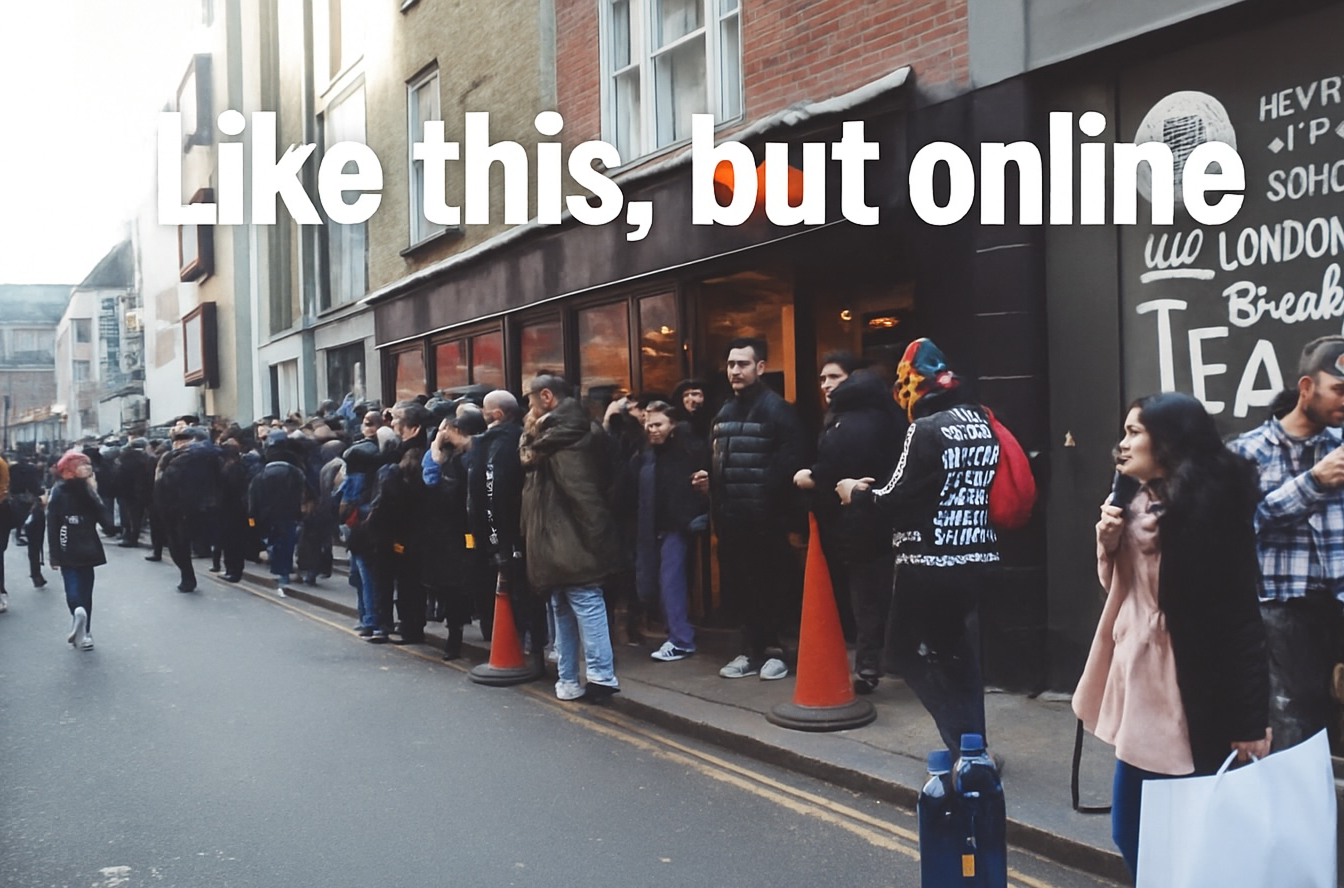
Nike just dropped three new limited edition sneakers you've never heard of. The FYP is full of people losing their minds over a restock. Welcome to drop culture - and it's not just for brands anymore - it is now THE WAY to sell for independent sellers, like you.
What's a product drop, actually?
A drop is a limited release of goods launched at a specific time to an audience who knows when to show up.
It's not "I have a webshop that's always open - tap on my website when you want." It's "I have 50 pieces available Friday at 8pm."
The magic? Your buyers aren't browsing. They're anticipating. They're showing up. They're buying before they miss out.
Drops turn shopping into an event.
Why drops work for indie sellers
You might be thinking: "That's cool for sneaker drops, but I sell vintage jewelry."
Drops work EVEN BETTER for indie sellers. Here's why:
1. You’re inviting people to an event
You focus on your tight-knit group of people and invite them to show up. People LOVE anticipation and it feels like they’re in on a secret party.
If it’s always available to them, it’s not exciting.
2. Scarcity is real, not manufactured
Big brands create artificial scarcity. You? You actually only have 20 vintage rings - 1 of each kind that you made with your hands. That scarcity is honest - and your buyers feel it.
3. You're building loyalty, not chasing traffic
Drops reward your actual community. The people who follow you, who show up, who know your taste. They get first access.
This isn't "whoever the algorithm shows it to." This is YOUR people getting YOUR drops.
4. It gives you time back
Always-on stores mean always-on work. Drops give you boundaries. You prep once, launch once, fulfill once. Then you're done until the next one.
You can actually have a life between drops.
The psychology that makes drops work
Scarcity sells - There's a reason the word "restock?" works. When something might disappear, people decide faster.
Identity matters - Drops aren't just buying. They're participating. "I got one" means something. Your community wants to be part of what you're building.
Urgency kills hesitation - "I'll think about it" becomes "I'll miss it." That shift is everything.
Anticipation = hype. The wait between "drop Friday 8pm" and actually dropping? That's marketing. People are thinking about it. Talking about it. Ready for it.
How to actually run a drop
1. Tease it early (and hack the algorithm while you're at it)
Post a sneak peek 24-48 hours before. Build anticipation. Use countdown stickers. Here's the bonus: comments and engagement on your tease posts signal to the algorithm that your content is worth showing. So when drop day comes, you're already primed for better reach. Tease → engagement → algorithm boost → more people see your actual drop. It's not just hype, it's strategy.
2. Set a time
"Friday 8pm" creates an event. "Whenever I get around to posting" doesn't.
3. Make buying frictionless
The window between "I want this" and "I bought this" should be seconds. Every extra step loses sales.
4. Create visuals that stop the scroll
Your drop announcement needs to POP. Video outperforms static images. Make people stop mid-scroll.
5. Track everything systematically
Who bought what. Who's waiting for shipping. Who's a repeat buyer. You can't grow if you're drowning in chaos.
6. Own your audience
Build a list you can notify directly - email, SMS, whatever. Don't rely on the algorithm to show your posts to your own followers.
7. Find your rhythm
Drops work best with consistency. Weekly, bi-weekly, monthly - whatever you can sustain. Your community will start anticipating the cadence.
What most people get wrong about drops
They think drops are just about scarcity.
But drops aren't really about "limited quantity."
They're about showing up for your community and your community showing up for you.
Your buyers aren't just customers. They're your people. Drops reward that relationship.
The biggest brands figured this out. You can too - and you have the advantage of real relationships, not manufactured hype.
Start with one
You don't need to overhaul everything. Just try one drop.
Pick a date. Tease it. Launch it. See what happens.
The infrastructure can get better over time. The mindset shift happens now.
Your audience is already there. They're just waiting for you to create something worth showing up for.
You've got this,
- Alex
Nike just dropped three new limited edition sneakers you've never heard of. The FYP is full of people losing their minds over a restock. Welcome to drop culture - and it's not just for brands anymore - it is now THE WAY to sell for independent sellers, like you.
What's a product drop, actually?
A drop is a limited release of goods launched at a specific time to an audience who knows when to show up.
It's not "I have a webshop that's always open - tap on my website when you want." It's "I have 50 pieces available Friday at 8pm."
The magic? Your buyers aren't browsing. They're anticipating. They're showing up. They're buying before they miss out.
Drops turn shopping into an event.
Why drops work for indie sellers
You might be thinking: "That's cool for sneaker drops, but I sell vintage jewelry."
Drops work EVEN BETTER for indie sellers. Here's why:
1. You’re inviting people to an event
You focus on your tight-knit group of people and invite them to show up. People LOVE anticipation and it feels like they’re in on a secret party.
If it’s always available to them, it’s not exciting.
2. Scarcity is real, not manufactured
Big brands create artificial scarcity. You? You actually only have 20 vintage rings - 1 of each kind that you made with your hands. That scarcity is honest - and your buyers feel it.
3. You're building loyalty, not chasing traffic
Drops reward your actual community. The people who follow you, who show up, who know your taste. They get first access.
This isn't "whoever the algorithm shows it to." This is YOUR people getting YOUR drops.
4. It gives you time back
Always-on stores mean always-on work. Drops give you boundaries. You prep once, launch once, fulfill once. Then you're done until the next one.
You can actually have a life between drops.
The psychology that makes drops work
Scarcity sells - There's a reason the word "restock?" works. When something might disappear, people decide faster.
Identity matters - Drops aren't just buying. They're participating. "I got one" means something. Your community wants to be part of what you're building.
Urgency kills hesitation - "I'll think about it" becomes "I'll miss it." That shift is everything.
Anticipation = hype. The wait between "drop Friday 8pm" and actually dropping? That's marketing. People are thinking about it. Talking about it. Ready for it.
How to actually run a drop
1. Tease it early (and hack the algorithm while you're at it)
Post a sneak peek 24-48 hours before. Build anticipation. Use countdown stickers. Here's the bonus: comments and engagement on your tease posts signal to the algorithm that your content is worth showing. So when drop day comes, you're already primed for better reach. Tease → engagement → algorithm boost → more people see your actual drop. It's not just hype, it's strategy.
2. Set a time
"Friday 8pm" creates an event. "Whenever I get around to posting" doesn't.
3. Make buying frictionless
The window between "I want this" and "I bought this" should be seconds. Every extra step loses sales.
4. Create visuals that stop the scroll
Your drop announcement needs to POP. Video outperforms static images. Make people stop mid-scroll.
5. Track everything systematically
Who bought what. Who's waiting for shipping. Who's a repeat buyer. You can't grow if you're drowning in chaos.
6. Own your audience
Build a list you can notify directly - email, SMS, whatever. Don't rely on the algorithm to show your posts to your own followers.
7. Find your rhythm
Drops work best with consistency. Weekly, bi-weekly, monthly - whatever you can sustain. Your community will start anticipating the cadence.
What most people get wrong about drops
They think drops are just about scarcity.
But drops aren't really about "limited quantity."
They're about showing up for your community and your community showing up for you.
Your buyers aren't just customers. They're your people. Drops reward that relationship.
The biggest brands figured this out. You can too - and you have the advantage of real relationships, not manufactured hype.
Start with one
You don't need to overhaul everything. Just try one drop.
Pick a date. Tease it. Launch it. See what happens.
The infrastructure can get better over time. The mindset shift happens now.
Your audience is already there. They're just waiting for you to create something worth showing up for.
You've got this,
- Alex